Why Your Top-Load Washer Shakes Like Crazy (And What You Can Do About It)
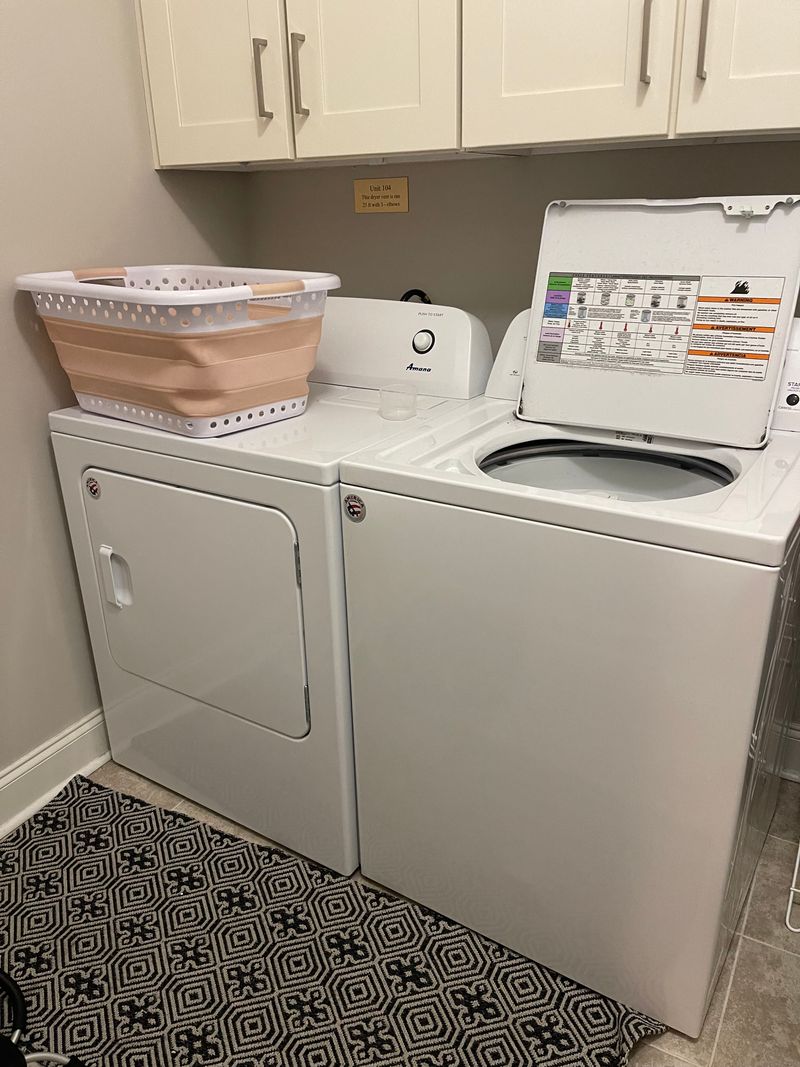
If your top-load washer sounds like it's trying to walk out of the laundry room during the spin cycle, you're not alone. This is one of the most common calls we get, and I'll be honest with you — modern washers are just more prone to shaking than the old ones were. But there's a real reason for that, and understanding it will help you figure out whether you need a repair or just a different way of loading your clothes.
Why Modern Washers Shake More Than Old Ones
If you grew up with a Maytag or Kenmore washer from the '90s or early 2000s, you probably remember it being a solid, heavy machine that barely moved during the spin cycle. That's because those old washers used heavy concrete counterweights — literal blocks of concrete bolted to the tub — along with thick metal springs to keep everything stable.
Manufacturers have moved away from that design. Today's top-load washers use a system of plastic suspension rods with small dampening pads instead of springs and counterweights. Why? Because it's cheaper. A set of four plastic suspension rods costs the manufacturer a fraction of what those heavy springs and concrete blocks did. The machine weighs less (cheaper to ship), uses fewer materials (cheaper to build), and for a while, it works fine.
The problem is those dampening pads wear out. They're little friction pads — kind of like brake pads — that control how much the tub bounces during the spin cycle. Once they wear down, the tub has almost no dampening, and you get violent shaking, banging, and a washer that literally walks across the floor.
Hayden's take: I've seen brand-new washers from 2020-2024 that needed suspension rods replaced within 3 years. On the old-style washers, I'd rarely see suspension problems before year 10-12. Manufacturers cut corners here, and homeowners pay the price.
Is It the Suspension or a Loading Issue?
Before you assume the worst, let me walk you through some loading problems that cause the exact same symptoms. Honestly, about half the shaking calls I go on turn out to be a loading issue — which is great news because it means no repair cost.
Don't Wrap Sheets Around the Agitator
This is the biggest one. When you wash bedsheets, they tend to wrap themselves around the agitator (the post in the middle) and form a heavy ball on one side of the tub. When the washer hits the spin cycle, that unbalanced weight causes the whole machine to go crazy.
The fix: Load sheets loosely around the sides of the tub, not wrapped around the agitator. Even better — wash sheets by themselves on a smaller load setting. Don't cram a king-size comforter and sheets in together.
Distribute Weight Evenly
Your washer needs the weight distributed fairly evenly around the tub. If you throw a heavy pair of jeans on one side and a bunch of light t-shirts on the other, the spin cycle will be unbalanced. Mix heavy and light items around the tub as you load.
Don't Overload It
I know it's tempting to cram everything in so you do fewer loads. But overstuffing a top-load washer makes it nearly impossible for the clothes to redistribute during the spin-up phase. The washer tries to sense the balance and adjust, but if there's too much weight, it can't compensate.
A good rule of thumb: fill the tub about 3/4 full. Clothes should be able to move freely when the agitator is running.
Don't Underload It Either
On the flip side, washing a single heavy item — like one bath towel or a single pair of jeans — can be just as bad. There's not enough weight to balance the load. Throw in a few more items to even things out.
How to Tell If Suspension Rods Are Bad
If you've been loading properly and the washer still shakes violently during every spin cycle, it's probably the suspension. Here's how to check:
- Open the lid and push down on the tub. It should compress smoothly and bounce back once or twice, then settle. If it bounces multiple times like a trampoline, the dampening pads are worn.
- Try to rock the tub side to side. There should be very little play. If it moves freely and clunks around, the rods or their connection points are worn.
- Look under the washer if you can. On most top-load washers, the suspension rods connect from the outer tub to the base frame. If you see cracked plastic, broken rods, or missing pads, that's your answer.
- Listen for banging during spin. If the tub is physically hitting the cabinet of the washer, the suspension is no longer doing its job.
Pro tip: When suspension rods go bad, you should replace all four at once — even if only one or two look worn. They wear at similar rates, and replacing just one creates an uneven suspension that'll cause new problems. The parts are usually $30-50 for a full set.
Other Causes of Shaking
Sometimes it's not the suspension or the loading. A few other things to check:
- Level the washer. Put a level on top of the machine. All four feet should be firmly on the floor. Most washer feet are adjustable — you can screw them in or out to level the machine. The front feet usually have lock nuts that you need to tighten after adjusting.
- Check the floor. If your washer is on a weak or bouncy floor (like a second-story laundry room or an older home with plywood subfloor), the floor itself can amplify the shaking. Anti-vibration pads under the feet can help.
- Shipping bolts. If this is a new washer and it's always shaken, make sure the shipping bolts or shipping straps were removed during installation. These lock the tub in place for transport, and if they're left in, the whole machine vibrates.
When to Call for Help
If you've tried proper loading, leveled the machine, and the tub still bounces like crazy when you push it down, the suspension needs to be replaced. It's a straightforward repair — we do washer repairs like this all the time. Most suspension rod replacements take about 30-45 minutes once we have the parts.
Fair warning though: if you let bad suspension rods go too long, the tub can start banging into the cabinet and damage other components. I've seen worn suspension rods lead to cracked outer tubs, broken drain hoses, and damaged wiring. Better to catch it early.
Washer Still Shaking After Everything?
We'll diagnose the problem and get your washer running smooth again. Serving West Valley City, Salt Lake City & nearby cities.